
Mobile Barber Blueprint
Blueprint Course
Mobile Barber Blueprint
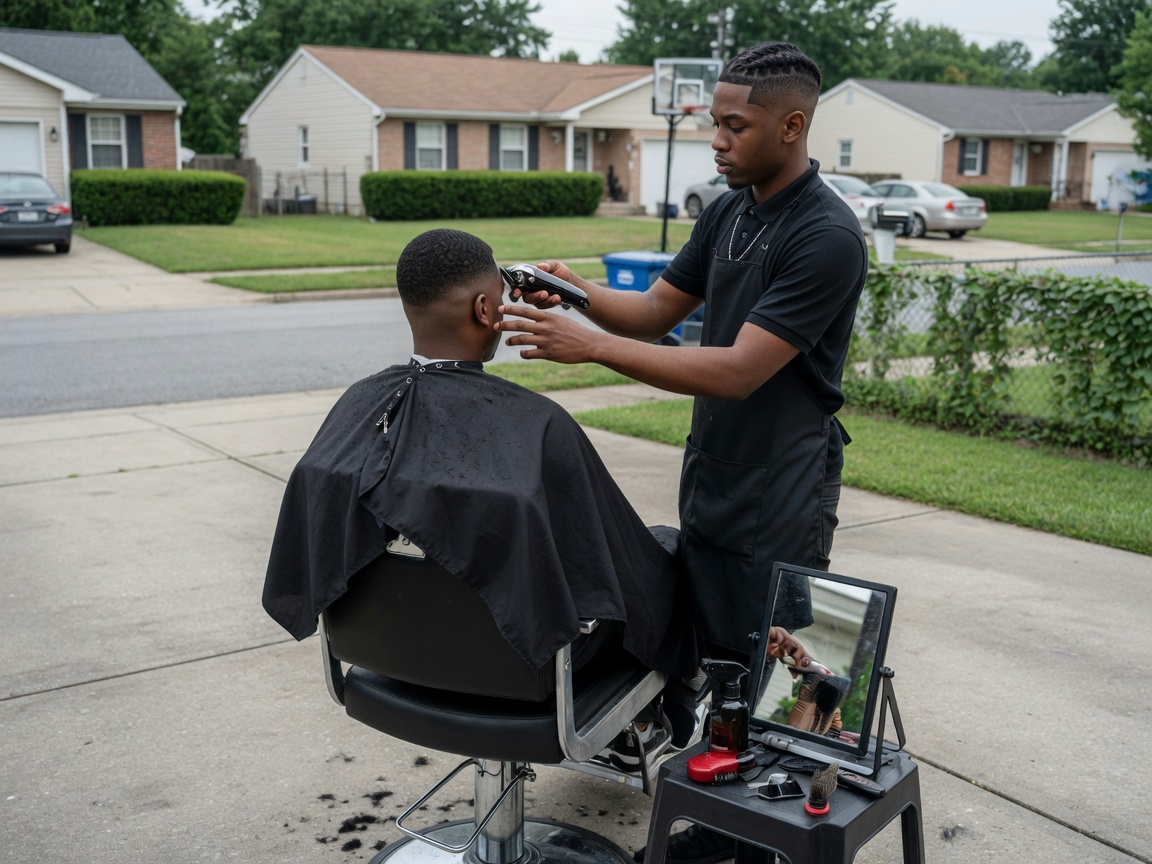
Launch collection candidateBuild a book of regulars behind a chair — then take the chair to them.
This course walks you from licensed barber (or barber-in-training) to a business owner with a full book: choosing between a booth-rent chair and a mobile house-call model, what each costs to start, how to price from real costs, how to get your first 10 paying clients, and the rebooking habits that make barbering unusually predictable revenue. Every money example uses the same booth base case: 35 cuts a week at a $35 average service, about $2 in blades and product per cut, and about $960 a month in fixed costs — booth rent of roughly $850 being the big one. At that base case, the math pencils out to about $3,660 a month in profit before tax. Separately, the typical planning range for an established solo barber is $1,500 to $4,000 a month before tax — a range, not a promise. The mobile model trades booth rent for drive time and a house-call premium; the course shows you that math honestly too. One thing before anything else: barbering is a licensed trade nearly everywhere, and no lesson here replaces your state's license.
What you get
Built for operators who want a clear path — not a pile of generic tips.
The base case
One worked example, not a target
Planning estimates, before tax and before anything you pay yourself — no income is guaranteed. Your own prices, volume and costs will differ; the course walks you through replacing every number here with yours.
Who this fits
- You hold (or are actively earning) a state barber or cosmetology license
- You are craft-obsessed and consistent — regulars come back for the exact same cut
- You genuinely like people; the chair is half conversation
- You can run a tight appointment calendar and enforce a no-show policy
- You are comfortable on your feet for long shifts, day after day
Honest risks
- State licensing is mandatory nearly everywhere — program hours and exams take real time and money before you can legally charge for a cut.
- Booth rent is due whether or not your book is full. A slow month still costs roughly $850 in rent.
- Repetitive-strain injuries — hands, shoulders, back, feet — are the career risk in this trade, and an injury stops revenue.
- Your book follows you, but slowly. Moving shops (or going mobile) always costs some momentum and some clients.
- Mobile work adds vehicle costs, unpaid drive time, and extra rules: many states restrict where licensed services may legally be performed — verify with your state board before selling house calls.
- No-shows are a direct hit: an empty appointment slot at a $35 average is money you cannot get back.
Who should skip this one
- You do not have a barber/cosmetology license and are not willing to complete your state's required program and exams first — there is no legal shortcut, and this course cannot substitute for one.
- You need dependable income immediately: filling a book takes weeks to months of hustle, booth rent is due from day one, and no income is guaranteed.
- You dislike repeat conversation and relationship maintenance — retention is the entire economic engine of a chair, and a purely transactional barber keeps refilling a leaky book.
- Your body cannot handle standing with raised arms for 6–8 hour stretches; repetitive-strain problems compound in this trade rather than fade.
- You want the mobile model but have no reliable vehicle, or your state board restricts services outside licensed establishments and you are not willing to work within those rules.
Curriculum
10 modules · 35 lessons · 2 hr 19 min of reading
01What a Barbering Business Really Is3 lessons · 12 min
Before you rent a chair or buy a kit, understand the model: a craft trade with a licensing gate, unusually repeatable revenue once the book fills, and a body that is the business.
- The Craft, the License, and the Book4 min
- The Math of a Barbering Month5 min
- Who This Fits — and Who It Doesn't3 min
02Booth, Mobile, or Both: Choosing Your Modelfree sample3 lessons · 13 min
The booth-rent chair is the proven base case; the mobile house-call model trades rent for drive time and a premium price. The honest math and rules for each — and the hybrid most mobile barbers actually run.
- The Booth-Rent Model: Rent a Chair, Keep the Margin4 min
- The Mobile Model: The Honest Trade-Offs(free sample below)5 min
- Choosing Your Starting Model (and the Hybrid)4 min
03Startup Costs and Setup3 lessons · 13 min
Exactly what the startup money buys — about $1,120 required, $1,570 typical — plus the boring-but-critical setup: bank account, ledger, and the booth agreement or mobile kit.
- Your Startup Budget: ~$1,120 Required, ~$1,570 Typical5 min
- Registration, Bank Account, and Simple Bookkeeping4 min
- Signing the Booth — or Building the Mobile Kit4 min
04Equipment and Supplies3 lessons · 11 min
The $350 core kit, the sanitation station your board will inspect, and the consumables math behind your ~$2-per-cut variable cost.
- The Core Kit: What $350 Buys4 min
- The Sanitation Station: Board Rules Are the Floor4 min
- Consumables: Your $2-Per-Cut Reality3 min
05Services and Pricing4 lessons · 17 min
A clean menu anchored on the $35 cut, pricing from costs and break-even instead of guesswork, the add-ons that lift your average ticket, and the house-call premium for mobile visits.
- Your Service Menu: Clear Beats Clever4 min
- Pricing From Costs and Break-Even — Never From Fear5 min
- Add-Ons: Lifting the Average Ticket4 min
- Pricing the House Call4 min
06Legal, Licensing, Insurance, and Taxes: What to Understand4 lessons · 17 min
The license comes first — barbering is a regulated trade nearly everywhere. Then business structures, insurance, and the tax set-aside habit. Education, not advice; everything here varies by location.
- Your License Comes First — Everywhere5 min
- Business Structures and the Booth Renter (Education)4 min
- Insurance: What a Barber Actually Carries (Education)4 min
- Taxes: The Set-Aside Habit (Education)4 min
07Branding and Being Findable4 lessons · 15 min
A name and look you won't outgrow, a booking link that removes friction, a Google Business Profile that collects reviews, and the fresh-cut content engine that markets for you.
- Name and Brand Basics3 min
- The Booking Link: Remove Every Ounce of Friction4 min
- Google Business Profile: Your Search Storefront4 min
- The Fresh-Cut Content Engine4 min
08Your First 10 Clients4 lessons · 15 min
A concrete sequence: three portfolio heads from your warm circle, then content and walk-ins converted to bookings, then teams, workplaces, and event partnerships — with the follow-up habits that fill a calendar.
- Clients 1–3: The Portfolio Heads4 min
- Clients 4–7: Content, Groups, and Converted Walk-Ins4 min
- Clients 8–10: Teams, Workplaces, and Events4 min
- Follow-Up: Where the Bookings Actually Happen3 min
09Delivering the Cut3 lessons · 12 min
The consultation that prevents bad cuts, a repeatable appointment flow that hits consistent quality on schedule, and the calendar discipline — deposits, reminders, no-show policy — that protects your income.
- The Consultation: Two Minutes That Prevent Every Bad Cut4 min
- The Appointment Flow: Same Order, Every Head4 min
- Calendar Discipline: Deposits, Reminders, and No-Shows4 min
10Reviews, Retention, and Growth4 lessons · 14 min
The review engine that compounds your Google profile, the rebooking habit that makes revenue predictable, the weekly operations rhythm — and the honest growth paths once your book is full.
- The Review Engine3 min
- Rebooking: The Habit That Fills the Book4 min
- The Weekly Operations Rhythm3 min
- Growth Paths When the Book Is Full4 min
Why people buy this
Built for first-time operators who want a clear path — not generic AI chat.
Honest fit check
Who should start — and who should skip — so you don't waste months on the wrong business.
Do-this-next lessons
Every lesson ends in an action: scripts, checklists, pricing math you can use this week.
One-time purchase
One payment of $59. No course subscription.
Mobile Barber Blueprint is part of the OwnerLaunch founding library. Figures in the course are planning estimates before tax — no income is guaranteed.
Blueprint FAQ
Why $59 for this Blueprint?+
You get a full operator course (10 modules, 35 lessons), a free sample lesson before you buy, downloadable templates after purchase, and a path into a personalized Launch Kit if you want one. It's a one-time payment — not a subscription for the course itself.
What do I get before I pay?+
The full curriculum outline, honest fit/risk lists, money base-case assumptions, a short course preview video when available, and one complete free sample lesson — real course content, not a teaser paragraph.
Is this legal, tax, or financial advice?+
No. OwnerLaunch is educational only. Licensing, insurance, tax, and filing requirements are location-dependent — verify with official sources and licensed professionals.
Can I upgrade to a Launch Kit later?+
Yes. Blueprint owners typically pay only the difference for a personalized Launch Kit (names, brand, pricing, copy, documents, 30-day plan). The course and kit are separate purchases.
Included templates & tools
- 30-Day Launch Checklist — The whole course compressed into a four-week launch sequence — license check, model decision, setup, portfolio heads, and your first paying clients.
- First 10 Clients Outreach Scripts — Copy-and-adapt scripts for portfolio heads, local group posts, walk-in conversion, team and workplace pitches, follow-ups, and reactivation texts.
- Client Intake & Consultation Template — The new-client record and the two-minute consultation script: questions, repeat-back line, cut formula fields, and mobile-visit logistics.
- Chair Pricing Calculator — Hand-computed worksheet: margin per cut, monthly break-even, profit before tax at three price points — with a booth column and a mobile column.
- Booth vs. Mobile Decision Worksheet — Side-by-side comparison with your real local numbers — rent, volume, premium, vehicle costs, and state rules — ending in a 6-month model commitment.
- Launch Readiness Self-Check — A 12-question self-check across licensing, money, sanitation, pricing, and policies — with honest scoring on what to fix before taking paid clients.
Free sample lesson
Real course content — not a teaser paragraph. The rest unlocks after purchase.
From module: Booth, Mobile, or Both: Choosing Your Model
The Mobile Model: The Honest Trade-Offs
~5 min read
Mobile barbering means the chair goes to the client — their home, office, or event. You swap the $850 booth rent for a vehicle, a portable kit, and drive time. The pitch to clients is powerful: no travel, no waiting room, a private appointment. That convenience commonly supports a house-call premium of roughly 1.5 to 2 times chair price — a $35 cut becomes about a $50–$70 visit. But the honest math cuts both ways, and this lesson is where you look at it straight.
- You do fewer cuts: drive time between clients is unpaid, so a 35-cut booth week might be 15–20 mobile visits — the premium exists to offset exactly this
- Your costs move, not vanish: fuel, vehicle wear, and a portable setup replace booth rent; setup and teardown at every stop eats minutes the chair never loses
- Legality is location-dependent: many states restrict where licensed services may be performed — some prohibit house calls, some require permits or allow them only in limited cases. Verify with your state board BEFORE selling a single mobile visit
- No walk-ins, no shop traffic: every mobile client comes from your own marketing and referrals — Module 8 matters double
Run the comparison with the course numbers: booth at 140 cuts × $33 margin − $960 fixed ≈ $3,660 a month before tax. Mobile at 70 visits (about 17 a week) × $55 average with ~$3 variable cost is about $3,640 in margin, minus realistic vehicle and kit costs of a few hundred a month — a similar neighborhood, earned in fewer cuts but more total hours once driving counts. Mobile is not a cheat code; it is a different shape of the same business that wins on flexibility and premium clients, not on effort saved.
Action · worksheet
Run your own booth-vs-mobile numbers
Using the Booth vs. Mobile Decision Worksheet in Resources, fill both columns with YOUR numbers: local booth rent, your realistic weekly cut count for each model, a chair price and a house-call price for your market, and honest vehicle costs. Then write one sentence: which model do the numbers favor for your first 6 months, and why?
Ready to make it yours?
A Launch Kit turns this Blueprint into your business: personalized name, brand, pricing, website copy, documents, and Action Plan.
Basic
$119 current
Pro
$199 current
Apply your Blueprint credit to Basic for +$60 or Pro for +$140.
More Blueprints
Related course · Home Services
Mobile Detailing Business Blueprint
Launch a mobile detailing business from your driveway to your first paying route.
Related course · Home Services
Residential Cleaning Business Blueprint
Launch a solo residential cleaning business — from first supply kit to a recurring weekly client base.
Recommended next · Beauty & Personal Care
Nail Tech Blueprint
From licensed skill to a full self-booked schedule.
Recommended next · Beauty & Personal Care
Pet Grooming Blueprint
Wags, clippers, and a loyal recurring clientele.
Recommended next · Beauty & Personal Care
Lash Tech Blueprint
Precision beauty work with strong rebooking rates.
All figures are estimates that assume a licensed solo barber with no employees in a typical U.S. market. The base case throughout is booth-based: 35 cuts a week at a $35 average service, about $2 in variable cost per cut (blades, guards, product), and about $960 a month in fixed costs, of which booth rent (~$850) is the dominant line. The mobile model is presented as a variant with its own trade-offs, and its legality varies by state. All profit figures are before tax and before anything you pay yourself; typical ranges are estimates of common outcomes, not guarantees — no income is guaranteed, and your market, prices, book, and effort decide where you land. Barbering is a licensed trade: nothing in this course replaces your state's licensing requirements, and legal, tax, and insurance lessons are education only, not professional advice. Requirements vary by state, county, and city.
Educational guidance only — not legal, tax, or financial advice.Details
OwnerLaunch provides educational business guidance, AI-generated drafts, and checklists. It is not a law firm, tax advisor, CPA, registered agent, or government agency. Information may not be complete or current for your specific location. Always verify requirements with official federal, state, city, and county sources and consult qualified professionals when needed.