
Pet Waste Removal Blueprint
Blueprint Course
Pet Waste Removal Blueprint
Simple weekly routes with near-zero startup cost.
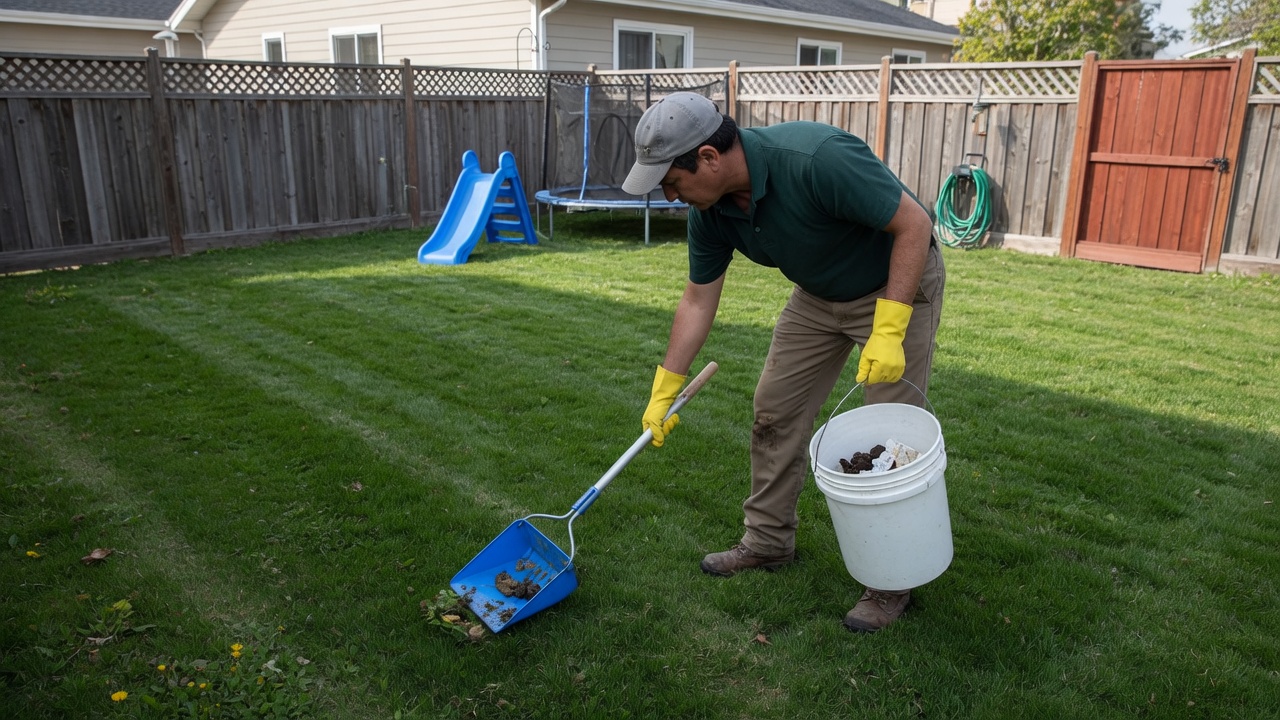
This course takes you from 'that's a real business?' to running a real pet waste removal service: what the work actually is (a weekly subscription route through backyards, not a gig app), what it costs to start ($150–$500 — the lowest-barrier home service in this catalog), how to price by dog count instead of by the hour, how to handle disposal legally and cleanly, and how to get your first 10 weekly customers. Because these figures are not inherited from the Discover profile for pet waste removal, every money example uses one explicit base case: a solo operator with 45 weekly stops at a $22 average per visit ($15–$30 per weekly visit in most markets, priced by dog count; a sustainable solo route runs 30–60 weekly stops), about $2 of variable cost per visit ($1–$3 — bags, bin liners, fuel share, disinfectant), and about $140 a month in fixed costs ($100–$180: general liability insurance, route and billing software, phone). That pencils out to roughly $1,500–$5,000 a month in profit before tax across the 30-to-60-stop range, around $3,700 at the base case — a planning estimate under stated assumptions, never a promise; no income is guaranteed. Note that the $1,500 low end of that envelope assumes 30 stops at a $15 average visit — the bottom of the pricing range, not the $22 base-case average. The single most important idea in this course is that pet waste removal is a subscription business. Nobody books a one-time scoop and disappears; customers sign up for weekly service and stay for months or years — which means the economics run on two levers: route density (like lawn care, the operator with 45 stops in three neighborhoods beats the operator with 45 stops scattered across the county, because a 10-minute yard with a 5-minute drive beats a 10-minute yard with a 20-minute drive every single day) and retention (at a weekly subscription, losing one customer costs you roughly $95 a month in revenue forever, so keeping customers is worth more than finding them). Module 5 makes that the backbone of the whole business. Three honest notes before the first paid yard. First, disposal is a real rule, not a detail: the standard model is double-bagging waste into the client's own trash bin, haul-away is a premium add-on that can trigger solid-waste hauling rules in some jurisdictions, and local waste ordinances are location-dependent homework in Module 6. Second, sanitation matters: dog feces can carry hookworm, roundworm, Giardia, and bacteria like Salmonella — the CDC-informed hygiene habits in Module 3 (gloves, tool disinfection between yards, hand washing) are simple, and this course treats them as professional standards, not scare content. Third, weather: demand is genuinely year-round — dogs go every day in January — but in snow-belt markets, snow cover pauses or thins the route for weeks and creates a big spring-cleanup surge, so the course plans for that honestly instead of pretending every month looks the same. One boundary note: this is a different business from dog walking — walking is a midday time-window service built on trust systems, keys, and the dogs themselves; waste removal is a yards business with flexible scheduling where you may never meet the dog. If daily animal interaction is the appeal, look at the Dog Walking & Pet Sitting Blueprint instead — and once you are running, dog walkers, groomers, and lawn crews make excellent referral partners.
What you get
Built for operators who want a clear path — not a pile of generic tips.
The base case
One worked example, not a target
Planning estimates, before tax and before anything you pay yourself — no income is guaranteed. Your own prices, volume and costs will differ; the course walks you through replacing every number here with yours.
Who this fits
- You want the lowest-barrier launch in this catalog — $150–$500 covers a scooper, bin, bags, basic insurance, and simple software, with no trailer, no chemicals certification, and no license requirement in most places (verify yours)
- You like the idea of a simple, repeatable weekly route — same yards, same order, every week — where reliability and consistency are the whole product
- You are comfortable with unglamorous work that most people will gladly pay to never do again — the ick factor is exactly why the demand exists
- You think in route-density terms: stacking customers within a tight radius, like a lawn care operator, so each day holds more paid stops and less windshield time
- You want recurring subscription revenue instead of one-off jobs — a customer signed up today is revenue every week until they cancel, and this course teaches you to make canceling rare
- You can work outdoors year-round in your climate, including cold, mud, and the spring thaw
Honest risks
- Retention is the whole game, and churn is silent: customers rarely complain first — they just notice a sloppy visit or a missed week, and cancel. Losing two or three weekly customers a month erases a month of marketing wins.
- Route density decides margin: 45 scattered stops can take twice the drive time of 45 clustered stops for the same revenue. Weak service-area discipline quietly kills this business the same way it kills lawn care routes.
- Disposal rules are location-dependent: some cities restrict what commercial operators may put in residential bins, and hauling waste away in your vehicle can classify you as a waste hauler with licensing requirements in some jurisdictions. Operating against local ordinances risks fines and gives an insurer a reason to walk away.
- Dog waste can carry zoonotic parasites and bacteria (hookworm, roundworm, Giardia, Salmonella, Campylobacter, E. coli). The risk is well managed with gloves, tool hygiene, and hand washing — but ignoring sanitation risks your health and cross-contaminating client yards.
- Loose or aggressive dogs in yards are an occupational hazard: a gate entered without checking, or a client who forgot to bring the dog in, can mean a bite. Gate protocols and dog-in-yard rules are safety essentials, not suggestions.
- Winter in snow-belt markets thins the route: snow cover pauses service for some or all customers, compressing income for weeks and creating a heavy spring-cleanup workload. Cash flow planning has to absorb that honestly.
- Price pressure is real at the low end: this business has almost no startup barrier, so competitors can undercut. Route density, reliability, and visit-photo professionalism are the defensible moat — not being the cheapest.
Who should skip this one
- You cannot stomach the work itself. This is picking up dog waste, yard after yard, in heat and cold, with smells and occasional messes worse than you imagine. If the honest answer is that you would dread every stop, no margin math fixes that — pick a different service business.
- You want one-off, high-ticket jobs instead of a slow-building subscription base. A route is built one $20 weekly customer at a time over months; if you need big invoices now, look at pressure washing or junk removal instead. No income is guaranteed here or anywhere.
- You would skip the disposal and sanitation rules. Double-bagging, using the client's bin unless you are set up for haul-away, disinfecting tools between yards, and following local waste ordinances are the professional core of this trade; if that sounds like optional fine print, you are a liability to your customers and yourself — and the rules are location-dependent, so verifying them is your job.
- You live in a deep snow-belt market and cannot financially handle a thin route for several winter weeks. Demand is year-round, but yards under a foot of snow pause service; if a slow February would sink you, build a cash buffer first or pair this with snow removal.
- You are not willing to be relentlessly reliable. A skipped week is instantly visible in the yard and is the number one reason customers cancel; if same-day-every-week consistency is not you, the retention engine this business runs on never starts.
Curriculum
10 modules · 35 lessons · 1 hr 52 min of reading
01What a Pet Waste Removal Business Really Is3 lessons · 10 min
The weekly subscription route, why the lowest-barrier home service still makes real money, how it differs from dog walking, and an honest go/no-go on whether it fits you.
- The Lowest-Barrier Home Service That Actually Works4 min
- Yards, Not Walks: How This Differs From Dog Walking3 min
- Founder Fit: The Go/No-Go Test3 min
02Startup Costs and Setup: $150–$5003 lessons · 9 min
The real startup budget line by line, the boring business-setup basics done in a weekend, and the phone-payments-software stack that runs a route business.
- The Real $150–$500 Budget, Line by Line3 min
- Business Setup Basics (One Honest Weekend)3 min
- Phone, Payments, and Software: The Simple Stack3 min
03Equipment, Supplies, and Sanitation3 lessons · 9 min
The core kit and how to use it fast, an honest CDC-informed look at what dog waste can carry, and the tool-hygiene habits that protect you and every yard on your route.
- The Core Kit and the 10-Minute Yard3 min
- What Dog Waste Can Actually Carry (Honest, Not Scary)3 min
- Tool Hygiene: Never Carry One Yard Into the Next3 min
04Services and Pricing4 lessons · 14 min
The service menu, pricing by dog count instead of by the hour, how to price first-time cleanups so they never burn you, and the cost-per-visit math behind every rate.
- The Service Menu: Weekly Is the Product3 min
- Price by Dog Count, Never by the Hour4 min
- The Initial Cleanup: Price the Backlog, Not the Visit3 min
- The Cost-Per-Visit Math Behind Every Rate4 min
05The Subscription Engine: Recurring Revenue and Retentionfree sample4 lessons · 15 min
The most important module in the course: why weekly subscriptions change every business decision, the 30-to-60-stop route-density math, retention as the real growth lever, and an honest look at weather and the year-round calendar.
- Why Subscriptions Change Everything(free sample below)4 min
- Route Density: The 30-to-60-Stop Math4 min
- Retention Is the Business: The Churn Math4 min
- Year-Round Demand, Weather Honesty3 min
06Legal, Insurance, Taxes, and Disposal Rules4 lessons · 13 min
Education only, never legal advice: business structure and licensing basics, the insurance that protects a yard-service operator, the disposal rules that define this trade, and the tax habits that prevent April disasters.
- Structure and Licensing: What's Commonly Required3 min
- Insurance: What a Yard Operator Actually Carries3 min
- Disposal Rules: Client Bin vs Haul-Away4 min
- Taxes: The Set-Aside Habit3 min
07Branding and Being Findable3 lessons · 8 min
A name and look that make a slightly funny business trustworthy, the free Google Business Profile that does your selling, and the three-sentence pitch you'll use everywhere.
- Naming and Branding a Scoop Business3 min
- Google Business Profile and the One-Page Website3 min
- The Three-Sentence Pitch2 min
08Marketing: Your First 10 Customers4 lessons · 12 min
A four-week plan to a starter route: warm circle and Nextdoor first, referral partners who serve your exact customer, door hangers that cluster your stops, and quoting that converts.
- The First 10 Plan: One Route Block at a Time3 min
- Warm Circle and Nextdoor: The Announcement That Works3 min
- Referral Partners: Vets, Groomers, Walkers, Lawn Crews3 min
- Door Hangers and the Neighbor-Cluster System3 min
09Service Delivery: The Perfect Visit4 lessons · 12 min
The visit routine that never varies, gate and dog safety protocols, the photo-and-notes system that makes invisible work visible, and how to handle weather days and misses like a professional.
- Onboarding a New Yard3 min
- Gates, Dogs, and Safety Protocols3 min
- Photos, Notes, and Making Invisible Work Visible3 min
- Weather Days, Reschedules, and the Missed-Pile Recovery3 min
10Reviews, Referrals, and Growth3 lessons · 10 min
The review engine that compounds your Google presence, referral mechanics tuned for neighbor clusters, and the honest growth decision at a full route: raise prices, add commercial stops, or add a second route.
- The Review Engine3 min
- Referrals and the Neighbor-Cluster Flywheel3 min
- The Full-Route Decision: Raise, Add Commercial, or Multiply4 min
Why people buy this
Built for first-time operators who want a clear path — not generic AI chat.
Honest fit check
Who should start — and who should skip — so you don't waste months on the wrong business.
Do-this-next lessons
Every lesson ends in an action: scripts, checklists, pricing math you can use this week.
One-time purchase
One payment of $59. No course subscription.
Pet Waste Removal Blueprint is part of the OwnerLaunch founding library. Figures in the course are planning estimates before tax — no income is guaranteed.
Blueprint FAQ
Why $59 for this Blueprint?+
You get a full operator course (10 modules, 35 lessons), a free sample lesson before you buy, downloadable templates after purchase, and a path into a personalized Launch Kit if you want one. It's a one-time payment — not a subscription for the course itself.
What do I get before I pay?+
The full curriculum outline, honest fit/risk lists, money base-case assumptions, a short course preview video when available, and one complete free sample lesson — real course content, not a teaser paragraph.
Is this legal, tax, or financial advice?+
No. OwnerLaunch is educational only. Licensing, insurance, tax, and filing requirements are location-dependent — verify with official sources and licensed professionals.
Can I upgrade to a Launch Kit later?+
Yes. Blueprint owners typically pay only the difference for a personalized Launch Kit (names, brand, pricing, copy, documents, 30-day plan). The course and kit are separate purchases.
Included templates & tools
- 30-Day Launch Checklist — The whole course sequenced into four weeks: setup and legal homework in week one, brand and systems in week two, marketing blitz in weeks three and four, first paid yards before day 30.
- Outreach & Quote Scripts — Word-for-word scripts for the warm-circle text, the Nextdoor introduction, the referral-partner visit, the phone/text quote, and the fence conversation.
- New Customer Intake & Service Agreement Template — The fill-in intake form covering dogs, gates, hazards, and disposal, plus a plain-language service agreement with weather, billing, and pause terms.
- Pricing & Route Calculator Worksheet — Hand-computed formulas from cost per visit to route-level monthly profit before tax, with three scenario columns and a route-density check.
- Sanitation & Disposal Self-Check Quiz — Twelve quick self-check questions on zoonotic hygiene, tool disinfection, and disposal rules — with answers and the module to revisit for anything missed.
- Retention & Churn Tracker Worksheet — A monthly one-page tracker for the numbers that actually grow a route: adds, losses, churn reasons, drive minutes per stop, and the four retention habits.
Free sample lesson
Real course content — not a teaser paragraph. The rest unlocks after purchase.
From module: The Subscription Engine: Recurring Revenue and Retention
Why Subscriptions Change Everything
~4 min read
Most service businesses restart from zero every month: a pressure washer who earned $4,000 in June wakes up July 1st owed nothing. A pet waste removal business is the opposite, and this one difference should drive every decision you make. Your customer doesn't buy a job — they subscribe to a clean yard. A two-dog household at $22 a visit is about $95 a month, roughly $1,140 a year, and the national scooper companies report customers routinely staying for years. Sign one customer in March and you have created a small annuity: revenue that arrives every month afterward with no new selling. Sign 45 of them and you have built roughly $4,300 a month of standing revenue before tax and costs — this course's base case, stated independently rather than inherited from a Discover profile: $15–$30 weekly visits by dog count, 30–60 stops as a sustainable solo route, roughly $2 variable cost per visit and $140 a month fixed. Estimates to verify against your market, never a promise — no income is guaranteed.
Here is what the subscription lens changes. Marketing: a $50 door-hanger batch that lands ONE weekly customer bought you ~$1,140 a year, so small, boring local marketing is wildly profitable — you never need to go viral, you need about one new neighbor a week. Pricing: you stop chasing big invoices and start valuing the boring $20 visit, because it repeats 52 times. Operations: reliability becomes the product itself — a subscriber isn't paying for any single visit, they're paying to never think about the yard again, and one missed week breaks precisely that spell. And growth: because revenue stacks instead of resetting, a route that adds just four net customers a month is a route that roughly doubles in a year. Simple work, compounding revenue — that is the entire thesis of this business.
- One weekly customer ≈ $95/month ≈ $1,140/year of standing revenue (base case — verify locally)
- Marketing math: tiny local spends are profitable when each win repeats 52 times
- Reliability IS the product: subscribers pay to never think about the yard
- Growth compounds: ~4 net new customers a month roughly doubles a young route in a year
Action · task
Compute your subscriber lifetime value
Take your two-dog weekly rate from Module 4, multiply by 4.33 for the monthly number, then by 12 for the annual number. Write both on an index card with the sentence 'This is what one customer is worth.' You'll use these numbers to sanity-check every marketing expense in Module 8.
Ready to make it yours?
A Launch Kit turns this Blueprint into your business: personalized name, brand, pricing, website copy, documents, and Action Plan.
Basic
$119 current
Pro
$199 current
Apply your Blueprint credit to Basic for +$60 or Pro for +$140.
More Blueprints
Related course · Local Professional
Dog Walking & Pet Sitting Blueprint
Midday routes and overnight stays on repeat.
Related course · Home Services
Lawn Care Business Blueprint
From honest fit-check to first customer — one short, practical step at a time.
Recommended next · Home Services
Residential Cleaning Business Blueprint
Launch a solo residential cleaning business — from first supply kit to a recurring weekly client base.
Recommended next · Home Services
Mobile Detailing Business Blueprint
Launch a mobile detailing business from your driveway to your first paying route.
Recommended next · Home Services
Pressure Washing Blueprint
Launch a pressure washing business where before/after photos do the selling.
All figures are estimates: these figures are not inherited from the Discover profile for pet waste removal, so the course states its own base case and every money figure inherits its assumptions — a solo operator with no employees in a typical U.S. market, running 45 weekly subscription stops at a $22 average per visit (market range $15–$30 per weekly visit, priced by dog count; a sustainable solo route runs 30–60 weekly stops), spending about $2 per visit on variable costs ($1–$3: bags, bin liners, fuel share, disinfectant), and carrying about $140 a month in fixed costs ($100–$180: general liability insurance, route/billing software, phone). Startup of $150–$500 covers tools, bags, insurance start-up, and basic software — the lowest-barrier home service in this catalog, which also means low barriers for competitors; reliability and route density are the moat, not exclusivity. All profit figures are before tax and before anything you pay yourself; the roughly $1,500–$5,000 monthly range is a typical outcome under these assumptions, not a guarantee — no income is guaranteed, and your market, route density, prices, retention, and effort decide where you land. Weekly recurring subscriptions are assumed as the revenue backbone; one-time cleanups, deodorizing add-ons, and commercial accounts are additive and not included in the base range. Demand is year-round, but in snow-belt markets snow cover can pause or thin routes for weeks and shift revenue into a spring-cleanup surge — plan cash flow accordingly. Sanitation content summarizes public health-agency education (CDC-style zoonotic guidance) and is education, not medical or veterinary advice. Disposal rules, waste ordinances, hauler licensing, insurance, business registration, and taxes are location-dependent education only, not legal, tax, or insurance advice — verify everything with your city, county, an insurer, and a tax professional before relying on it.
Educational guidance only — not legal, tax, or financial advice.Details
OwnerLaunch provides educational business guidance, AI-generated drafts, and checklists. It is not a law firm, tax advisor, CPA, registered agent, or government agency. Information may not be complete or current for your specific location. Always verify requirements with official federal, state, city, and county sources and consult qualified professionals when needed.