
Snow Removal Blueprint
Blueprint Course
Snow Removal Blueprint
Winter revenue for cold-climate service businesses.
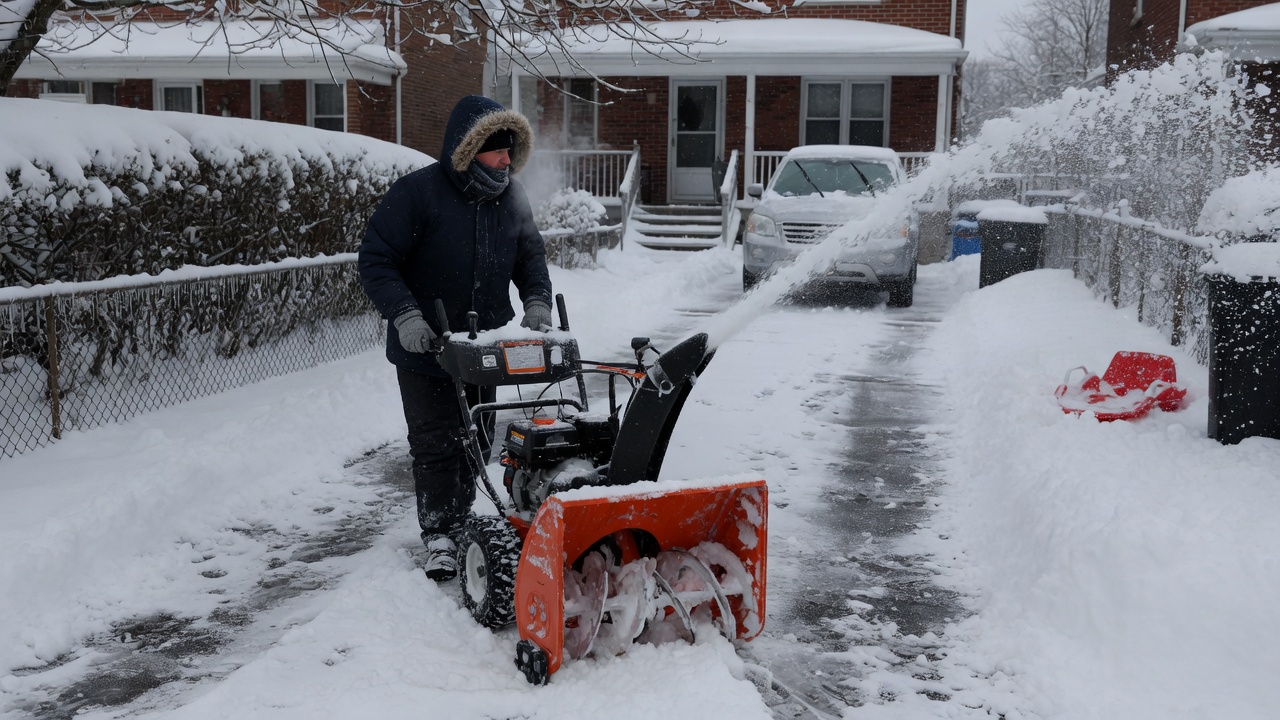
This course takes you from zero to a working residential snow removal business: what storm-day work really looks like, what it costs to start with shovels and a snow blower instead of a plow truck, how to price per push and per season from your real costs, how to sell your route in October before the first flake falls, and how to survive the one risk that defines this business — winters when it barely snows. It is built for a solo operator starting with roughly $300 to $1,200: $300 if you start shovel-first with ice melt and a spreader, closer to $1,200 if you buy a new single-stage snow blower and your first insurance payment up front. A plow truck is deliberately out of scope as a startup purchase — it is a major upgrade covered at the end, not an entry requirement. Every money example uses the same base case: a route of 15 to 25 nearby driveways at $30 to $60 per push (driveway plus walkway), roughly $4 per push in fuel and ice melt wear, and about $150 a month in winter fixed costs. In an active snow month with 4 to 6 billable snowfalls, that pencils out to roughly $1,400 to $5,500 in profit before tax — and close to zero in a month when it does not snow, because revenue here is rented from the weather. Seasonal contracts, sold before the season, are how operators smooth that out, and pairing snow with a summer service like lawn care is how they build a year-round income. These are planning estimates, not local facts: snowfall, prices, and demand vary enormously by region, so verify everything against your own market. Your results depend on your climate, your route density, and your effort; no income is guaranteed.
What you get
Built for operators who want a clear path — not a pile of generic tips.
The base case
One worked example, not a target
Planning estimates, before tax and before anything you pay yourself — no income is guaranteed. Your own prices, volume and costs will differ; the course walks you through replacing every number here with yours.
Who this fits
- You live somewhere with a real winter — multiple plowable snowfalls in a normal season — and you can verify that with local snowfall history, not hope
- You can physically handle cold, dark, early-morning work: storms do not schedule themselves for comfortable hours
- You want a low-cost entry into home services — a few hundred dollars of equipment, not a $40,000 plow truck
- You are organized enough to sell in October, service in January, and budget across months with zero revenue
- You already run (or want to run) a summer service like lawn care and need the winter side of a year-round business
Honest risks
- Weather dependence is extreme and structural: a low-snow or no-snow winter can cut per-push revenue to nearly zero for an entire season, and you cannot market your way out of a warm January. Seasonal contracts hedge this — but only if you sold them before the season started.
- Slip-and-fall liability follows every job: if someone falls on a surface you serviced (or skipped), you can be pulled into a claim. Insurance, careful contracts, ice melt done right, and service logs are the cost of playing.
- The work is physically risky: snow shoveling is linked to heart strain in cold weather, and snow blowers cause thousands of ER-treated injuries a year — including finger amputations from clearing clogged augers by hand.
- Storm timing owns your life in season: back-to-back storms, 4 a.m. starts, and every customer wanting service at once. Route density and honest customer communication are the only ways to keep up.
- Low startup cost means competitors everywhere: every winter brings teenagers with shovels and landscapers with plows. Pre-sold contracts, reliability, and reviews are your moat — price alone is not.
- Equipment fails at the worst moment: a snow blower that will not start mid-storm turns a 6-hour route into a 14-hour shovel day. Maintenance habits and a backup plan (shovels, a rental, a partner operator) are part of the job.
Who should skip this one
- You need predictable monthly income from this alone — snow removal revenue is rented from the weather, a low-snow winter can mean almost no per-push revenue for months, and no income is guaranteed. If a $0 month would sink you, do not build your budget on this business by itself.
- You cannot or will not work at 4 a.m. in a storm — customers expect a cleared driveway before their morning commute, and an operator who sleeps through the first two storms has no route by the third.
- You are not physically ready for repeated cold, heavy work — snow shoveling is strenuous enough that health authorities warn about heart strain, and a route means doing it at 20 houses in a row.
- You will not carry general liability insurance from customer one — slip-and-fall claims are the defining lawsuit risk of this trade, and clearing snow without coverage bets your savings on every icy walkway.
- You want to skip the pre-season selling grind — this business is won in October and November door-to-door, and if you plan to 'wait for the first storm and see', established operators will already hold the contracts.
Curriculum
10 modules · 34 lessons · 1 hr 44 min of reading
01Is Snow Removal Right for You?free sample3 lessons · 10 min
What storm-day work actually looks like, the honest math of a weather-dependent season, and a clear go/no-go decision before you spend a dollar.
- What the Work Really Is3 min
- The Math of a Snow Season(free sample below)4 min
- Go or No-Go: Your Honest Fit Check3 min
02Startup Costs and Setup3 lessons · 9 min
The real $300–$1,200 budget, the shovel-first versus blower-first decision, and the boring setup basics that make you a real business.
- The $300–$1,200 Budget, Line by Line3 min
- Shovel-First or Blower-First?3 min
- Setup Basics That Make You Real3 min
03Equipment and Supplies3 lessons · 9 min
Choosing a snow blower you can rely on, the ice melt aisle decoded, and the maintenance habits that keep a route alive mid-storm.
- Choosing Your Snow Blower3 min
- Shovels, Ice Melt, and Spreaders3 min
- Maintenance — and the Plow Truck Question3 min
04Services and Pricing4 lessons · 13 min
Price per push from your real costs, understand seasonal contracts, and blend the two so neither a warm winter nor a brutal one breaks you.
- Per-Push Pricing from Real Costs4 min
- Seasonal Contracts, Explained3 min
- The Blend: Per-Push Plus Seasonal3 min
- Add-Ons That Raise the Ticket3 min
05Legal, Insurance, and Taxes4 lessons · 13 min
Location-dependent education on registration, the slip-and-fall risk that defines this trade, contracts that protect both sides, and taxes for a seasonal business.
- Registration and Licensing Basics3 min
- Slip-and-Fall: The Risk That Defines This Trade4 min
- Contracts That Protect Both Sides3 min
- Taxes for a Seasonal Business3 min
06Branding and Being Findable3 lessons · 7 min
A trustworthy name and look, a Google Business Profile that works in a seasonal market, and the print materials that actually sell snow.
- A Name Neighbors Trust2 min
- Google Business Profile for a Seasonal Business3 min
- Flyers, Magnets, and Yard Signs2 min
07Pre-Season Selling: Your First 10 Customers4 lessons · 12 min
Why October decides your winter, the door-knocking system that fills a route, and how to close seasonal contracts before the first flake.
- Why October Decides Your Winter3 min
- Start With Your Own Street3 min
- Neighborhood Groups and Early Referrals3 min
- Closing the Seasonal Contract at the Door3 min
08Storm-Day Operations4 lessons · 13 min
The trigger-and-route system, clearing fast without getting hurt, ice melt done right, and the communication that keeps customers calm mid-storm.
- The Trigger and the Route3 min
- Clearing Fast Without Getting Hurt4 min
- Ice Melt Done Right3 min
- Communication During a Storm3 min
09Weather Risk and Cash Flow3 lessons · 9 min
Facing the no-snow winter honestly, structuring revenue to survive variance, and budgeting a lumpy seasonal income across the year.
- The No-Snow Winter3 min
- Structuring Revenue to Survive Variance3 min
- Budgeting a Lumpy Income3 min
10Reviews, Referrals, and the Year-Round Business3 lessons · 9 min
Turning winter reliability into reviews and referrals, pairing snow with a summer service, and choosing your growth path — bigger route, second operator, or (eventually) the plow truck.
- Reviews and Winter Referrals3 min
- Pairing With Summer Services3 min
- Growing: Bigger Route, Second Operator, or the Truck3 min
Why people buy this
Built for first-time operators who want a clear path — not generic AI chat.
Honest fit check
Who should start — and who should skip — so you don't waste months on the wrong business.
Do-this-next lessons
Every lesson ends in an action: scripts, checklists, pricing math you can use this week.
One-time purchase
One payment of $59. No course subscription.
Snow Removal Blueprint is part of the OwnerLaunch founding library. Figures in the course are planning estimates before tax — no income is guaranteed.
Blueprint FAQ
Why $59 for this Blueprint?+
You get a full operator course (10 modules, 34 lessons), a free sample lesson before you buy, downloadable templates after purchase, and a path into a personalized Launch Kit if you want one. It's a one-time payment — not a subscription for the course itself.
What do I get before I pay?+
The full curriculum outline, honest fit/risk lists, money base-case assumptions, a short course preview video when available, and one complete free sample lesson — real course content, not a teaser paragraph.
Is this legal, tax, or financial advice?+
No. OwnerLaunch is educational only. Licensing, insurance, tax, and filing requirements are location-dependent — verify with official sources and licensed professionals.
Can I upgrade to a Launch Kit later?+
Yes. Blueprint owners typically pay only the difference for a personalized Launch Kit (names, brand, pricing, copy, documents, 30-day plan). The course and kit are separate purchases.
Included templates & tools
- 30-Day Pre-Season Launch Checklist — The whole course sequenced into four weeks of concrete tasks — from snowfall research and gear-up to a sold route before the first storm.
- Pre-Season Door Pitch and Closing Script — Word-for-word door script for October selling — opener, discovery, the per-push/seasonal choice, objection answers, and the at-the-door close.
- Seasonal Snow Service Agreement (Fill-In Template) — A one-page fill-in service agreement covering scope, trigger depth, timing, payment, season dates, and property notes — for per-push or seasonal customers.
- Snow Pricing Calculator Worksheet — Hand-computed formulas: true cost per push, price floor, active-month and worst-winter profit before tax, and seasonal contract break-even.
- Storm-Day Safety Self-Check (Quiz) — Ten questions on the auger rule, shoveling strain, ice melt, and storm-day judgment — with an answer key. Retake it every pre-season.
Free sample lesson
Real course content — not a teaser paragraph. The rest unlocks after purchase.
From module: Is Snow Removal Right for You?
The Math of a Snow Season
~4 min read
Here is the base case this whole course uses — and because these figures are not inherited from the Discover profile for it, treat every number as a planning estimate to check against your own area. You run a route of 15 to 25 nearby residential driveways at $30 to $60 per push (driveway plus walkway). In an active snow month, your area gets 4 to 6 billable snowfalls. Call the middle of that a 20-driveway route at $40, with 5 storms: 100 pushes, about $4,000 in revenue for the month. Revenue is not profit. Each push burns roughly $4 in fuel and ice melt, and winter fixed costs — insurance, phone, a little marketing, blower upkeep — run about $150 a month whether it snows or not.
- Active-month revenue: 15–25 driveways × 4–6 storms × $30–$60 = roughly $1,800–$6,250 at typical combinations (the biggest route, the snowiest month, and the top price rarely all stack)
- Variable costs: about $4/push (fuel, ice melt, wear) = roughly $250–$600 in an active month
- Fixed costs: about $150/month (insurance, phone, marketing, maintenance)
- Left over: roughly $1,400–$5,500 in an ACTIVE month, before tax — and close to $0 in a month with no snow
Now the part that defines this business: that active month is not promised. Snowfall varies wildly year to year — some winters deliver 15-plus billable storms, and some deliver two. A per-push-only operator in a warm winter earns almost nothing, which is why Module 4 teaches seasonal contracts (customers pay a flat $300–$600 for the season, snow or no snow) and Module 9 teaches how to blend the two so one bad winter does not end you. Plan your personal budget around the worst realistic winter in your snowfall history, not the best month, and verify every price against local competitors. No income is guaranteed.
Action · worksheet
Build your own season math
Copy the four lines above and change the inputs using YOUR snowfall sheet from the last lesson: how many driveways could you realistically clear per storm in the hours before a morning commute (at 15–25 minutes each)? How many billable storms does your area get in a normal winter — and in the worst of the last five? Search three local snow removal competitors (or ask in a neighborhood group what people pay) and replace the $30–$60 range with real local numbers. Recalculate an active month, then a whole season, then the worst-winter season. Keep this sheet — you will refine it with the Pricing Calculator resource in Module 4.
Ready to make it yours?
A Launch Kit turns this Blueprint into your business: personalized name, brand, pricing, website copy, documents, and Action Plan.
Basic
$119 current
Pro
$199 current
Apply your Blueprint credit to Basic for +$60 or Pro for +$140.
More Blueprints
Related course · Home Services
Lawn Care Business Blueprint
From honest fit-check to first customer — one short, practical step at a time.
Related course · Home Services
Gutter Cleaning Blueprint
Launch a gutter cleaning business built around two big seasons and a repeat route.
Recommended next · Home Services
Residential Cleaning Business Blueprint
Launch a solo residential cleaning business — from first supply kit to a recurring weekly client base.
Recommended next · Home Services
Mobile Detailing Business Blueprint
Launch a mobile detailing business from your driveway to your first paying route.
Recommended next · Home Services
Pressure Washing Blueprint
Launch a pressure washing business where before/after photos do the selling.
This course independently states the following planning estimates: a solo operator clearing residential driveways and walkways with shovels and a snow blower (no plow truck — that is treated as a major later upgrade, not a startup purchase), running a route of 15–25 driveways at $30–$60 per push or seasonal contracts of roughly $300–$600 per driveway per season, with about $4 in variable cost per push and about $150/month in winter fixed costs. Under those assumptions an active snow month pencils to roughly $1,400–$5,500 in profit before tax — and a month without snow pencils to roughly zero, because this business is extremely weather-dependent and snowfall varies widely by region and by year. Startup runs roughly $300–$1,200 depending mostly on the snow blower decision. All figures are estimates to verify against your own market (local competitor prices, your area's actual snowfall history, real insurance quotes, current retail prices) before you rely on them; actual results vary with climate, storm counts, route density, pricing, and effort, and no income is guaranteed. Legal, licensing, insurance, and tax content in this course — including sidewalk ordinances and contract terms — is location-dependent education, not legal, tax, or professional advice; verify requirements locally.
Educational guidance only — not legal, tax, or financial advice.Details
OwnerLaunch provides educational business guidance, AI-generated drafts, and checklists. It is not a law firm, tax advisor, CPA, registered agent, or government agency. Information may not be complete or current for your specific location. Always verify requirements with official federal, state, city, and county sources and consult qualified professionals when needed.