
Carpet Cleaning Blueprint
Blueprint Course
Carpet Cleaning Blueprint
Launch collection candidateEquipment-led deep cleaning homeowners rebook.
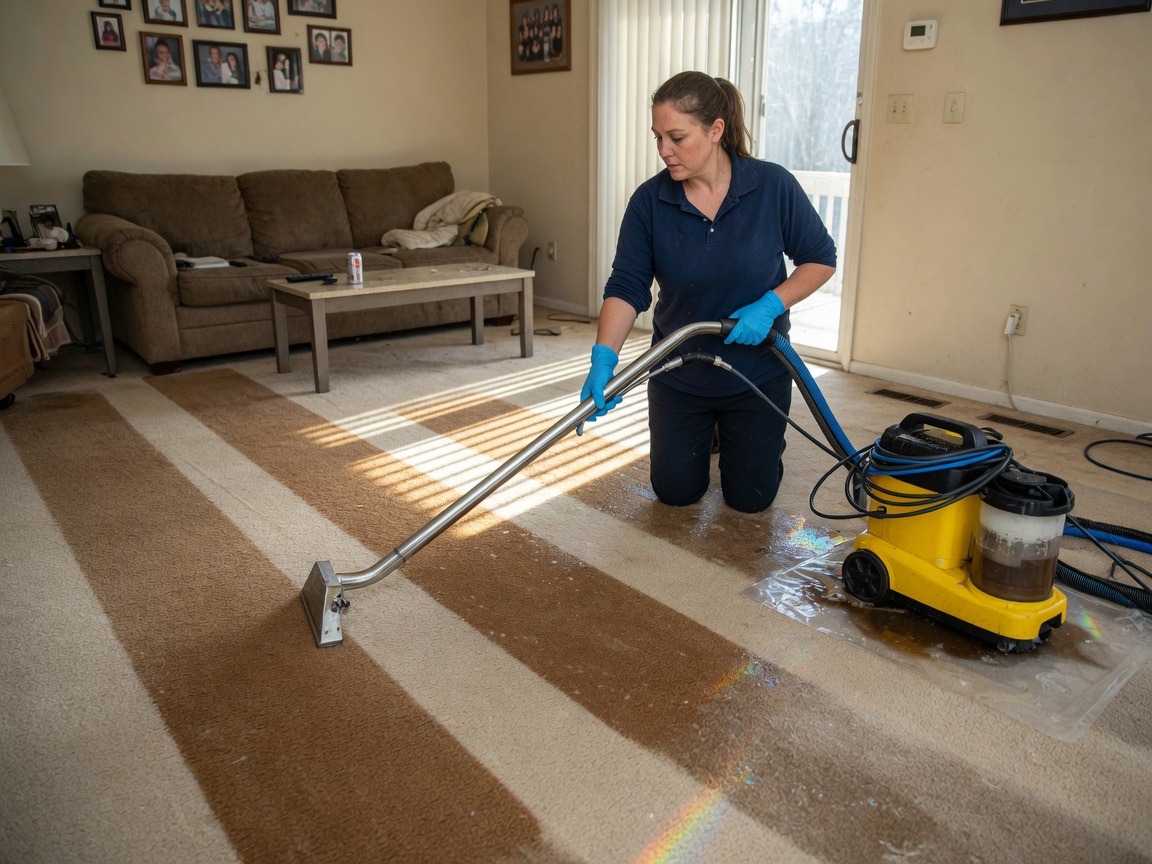
This course takes you from zero to a working carpet cleaning business: what the job really is, the three honest ways to start (rented machine, portable extractor, truck-mount), what to buy and when, how to price by room instead of by hour, how to land your first 10 customers, and how to deliver jobs that dry fast and get rebooked. It is built for a solo operator. Because these figures are not inherited from the Discover profile for this course, every money example uses a stated base case you must check against your own market: 5–7 jobs a week at $150–$250 per average 3-room job (the course math uses 6 jobs a week at a $200 average), about $20 in chemicals and consumables per job, and about $220 a month in fixed costs. Startup runs roughly $1,500–$3,500 if you buy a portable extractor up front — but the course also maps a cheaper rental-machine entry path (roughly $400–$800 all-in) for validating demand before you commit. That base case pencils out to a typical planning range of about $1,500–$4,000 a month in profit before tax at full schedule — an estimate to verify locally, not a promise. No income is guaranteed.
What you get
Built for operators who want a clear path — not a pile of generic tips.
The base case
One worked example, not a target
Planning estimates, before tax and before anything you pay yourself — no income is guaranteed. Your own prices, volume and costs will differ; the course walks you through replacing every number here with yours.
Who this fits
- You like visible transformation work — a matted, stained carpet coming back to life is your kind of satisfying
- You can handle physical work: hauling a 60+ pound machine, moving furniture, and hours of repetitive wand passes
- You have (or can get) a vehicle that can carry an extractor, hoses, and a chemical kit — an SUV, van, or hatchback works
- You want repeat customers on 6–12 month cycles plus recurring commercial accounts, not just one-off jobs
- You are comfortable working inside strangers' homes and being trusted around their belongings
Honest risks
- Equipment is the business. A portable extractor failure stops all revenue until it is repaired or replaced — and the rental fallback eats your margin while it does.
- Wet carpet is a liability: over-wetting can cause odor, browning, or delamination, and a ruined room of carpet can cost more than a month of profit.
- Wastewater disposal is regulated in many places — recovered dirty water commonly cannot go into storm drains, and getting this wrong can mean fines.
- Demand is lumpy and seasonal: spring cleaning and pre-holiday spikes, slow deep-winter months, and move-out surges tied to local lease cycles.
- It is physically demanding — repetitive wand strokes, stairs with a heavy machine, and kneeling stain work wear on your body, and an injury stops revenue.
- Truck-mount competitors can out-clean and out-speed a portable on big jobs; you win on scheduling, care, and smaller jobs, not on raw equipment power at first.
Who should skip this one
- You cannot lift and stair-carry a 60+ pound machine repeatedly — portables are heavy and the work is physical every single day.
- You need dependable income immediately: the first-10-customers plan takes weeks of unpaid groundwork, results vary by market, and no income is guaranteed.
- You won't follow a dry-pass and moisture discipline — over-wetting carpet is the classic beginner mistake and it creates callbacks, odors, and damage claims.
- You want a purely hands-off or passive business — this is a skilled physical trade where you are the technician for at least the first year.
Curriculum
9 modules · 30 lessons · 2 hr of reading
01What This Business Really Is3 lessons · 12 min
Before you spend a dollar on equipment, understand the job: what you sell, what the money looks like under a stated base case, and whether this trade fits you.
- What the Work Really Is4 min
- The Math of a Carpet Cleaning Month5 min
- Who This Fits — and Who It Doesn't3 min
02Startup Costs: Three Honest Ways to Startfree sample3 lessons · 13 min
The equipment-tier decision is the startup-cost decision: rented machine (~$400–$800), portable extractor ($1,500–$3,500), or truck-mount (not yet). Plus the boring setup steps that save you pain later.
- The Three Equipment Tiers: Rental, Portable, Truck-Mount(free sample below)5 min
- Your Startup Budget, Line by Line4 min
- Registration, Bank Account, and Simple Bookkeeping4 min
03Equipment and Supplies3 lessons · 12 min
How to choose a portable extractor that earns its price, the chemical kit behind your ~$20-per-job cost, and the drying gear and vehicle load-out that prevent callbacks.
- Choosing a Portable Extractor That Earns Its Price4 min
- Chemicals: Your ~$20-Per-Job Reality4 min
- Drying Gear and Your Vehicle Load-Out4 min
04Services and Pricing4 lessons · 16 min
A room-based menu customers understand in five seconds, prices built from your real costs, the add-ons that lift every ticket, and the recurring work that stabilizes your month.
- Your Service Menu: Price the Room, Never the Hour4 min
- Pricing From Your Real Costs4 min
- Add-Ons: Lifting Every Ticket4 min
- Recurring Work: Cycles and Commercial Accounts4 min
05Legal, Insurance, and Taxes: What to Understand4 lessons · 16 min
Education — not advice — on business structures, licenses, wastewater rules, insurance, and the tax set-aside habit. Everything here varies by location; the goal is to know what questions to ask.
- Business Structures: Sole Proprietor vs. LLC (Education)4 min
- Licenses, Wastewater Rules, and the EIN (Education)4 min
- Insurance: Why It's in the Required Column (Education)4 min
- Taxes: The Set-Aside Habit (Education)4 min
06Branding and Being Findable3 lessons · 11 min
A name you won't outgrow, a Google Business Profile that collects the calls, and the before/after photo engine that does your marketing for you.
- Name and Brand Basics3 min
- Google Business Profile: Your Real Storefront4 min
- The Before/After Engine and a Booking Flow That Works4 min
07Your First 10 Customers4 lessons · 15 min
A concrete sequence: three portfolio carpets, then your neighborhood and local groups, then realtors, landlords, and offices — with the follow-up habits that turn interest into bookings.
- Customers 1–3: The Portfolio Carpets4 min
- Customers 4–7: Neighborhood and Local Groups4 min
- Customers 8–10: Realtors, Landlords, and Offices4 min
- Follow-Up: Where the Bookings Actually Happen3 min
08Delivering the Job3 lessons · 13 min
The pre-job walkthrough that prevents disputes, the five-step cleaning workflow that produces consistent results, and the drying discipline that eliminates callbacks.
- The Pre-Job Walkthrough: Confirm, Inspect, Set Expectations4 min
- The Five-Step Workflow: Same Order, Every Job5 min
- Drying Discipline and the Callback Playbook4 min
09Reviews, Rebooking, and Growing Past Solo3 lessons · 12 min
The review engine that compounds, the reminder system that turns one-off jobs into cycles, and the honest growth ladder — from full calendar to second machine to (maybe, eventually) a truck-mount.
- The Review Engine4 min
- Rebooking Cycles and Referrals4 min
- The Weekly Rhythm and the Honest Growth Ladder4 min
Why people buy this
Built for first-time operators who want a clear path — not generic AI chat.
Honest fit check
Who should start — and who should skip — so you don't waste months on the wrong business.
Do-this-next lessons
Every lesson ends in an action: scripts, checklists, pricing math you can use this week.
One-time purchase
One payment of $59. No course subscription.
Carpet Cleaning Blueprint is part of the OwnerLaunch founding library. Figures in the course are planning estimates before tax — no income is guaranteed.
Blueprint FAQ
Why $59 for this Blueprint?+
You get a full operator course (9 modules, 30 lessons), a free sample lesson before you buy, downloadable templates after purchase, and a path into a personalized Launch Kit if you want one. It's a one-time payment — not a subscription for the course itself.
What do I get before I pay?+
The full curriculum outline, honest fit/risk lists, money base-case assumptions, a short course preview video when available, and one complete free sample lesson — real course content, not a teaser paragraph.
Is this legal, tax, or financial advice?+
No. OwnerLaunch is educational only. Licensing, insurance, tax, and filing requirements are location-dependent — verify with official sources and licensed professionals.
Can I upgrade to a Launch Kit later?+
Yes. Blueprint owners typically pay only the difference for a personalized Launch Kit (names, brand, pricing, copy, documents, 30-day plan). The course and kit are separate purchases.
Included templates & tools
- 30-Day Launch Checklist — The whole course compressed into a four-week launch sequence — tier decision, setup, portfolio jobs, and your first paying customers.
- First-Customers Outreach Scripts — Copy-and-adapt scripts for portfolio jobs, local group posts, door hangers, realtors, landlords, offices, follow-ups, and rebooking reminders.
- Room Count & Quote Sheet — The fill-in quote you complete during the walkthrough: rooms, stairs, add-ons, condition adders, total, and the expectations acknowledgment.
- Pricing Calculator Worksheet — Compute your real per-job costs and before-tax margin at each price point — including the rental-day version — before you print a menu.
- Founder Fit & Launch Readiness Quiz — Two honest self-checks: whether this trade fits you, and whether you are actually ready to take your first paying job.
Free sample lesson
Real course content — not a teaser paragraph. The rest unlocks after purchase.
From module: Startup Costs: Three Honest Ways to Start
The Three Equipment Tiers: Rental, Portable, Truck-Mount
~5 min read
Every carpet cleaning startup decision flows from one honest question: how much machine can you afford, and how much do you actually need on day one? There are three tiers, and this course refuses to pretend they are interchangeable. Tier 1 is a rented commercial machine (roughly $35–$60 a day from big-box and janitorial-supply rental counters): your all-in entry cost is about $400–$800 including chemicals, basic tools, insurance, and first marketing. It is slower, less powerful, and you must pick it up and return it — but it lets you take real paying jobs and validate demand before committing serious money.
Tier 2 — the course's main path — is buying a commercial portable extractor: roughly $900–$2,200 for a solid new or lightly used unit with a wand and hoses, landing your total startup at about $1,500–$3,500 once chemicals, tools, insurance, registration, and first marketing are added. A good portable with 100+ PSI, strong dual-stage vacuum, and ideally a heater cleans genuinely well and fits in an SUV or van. Tier 3 is a truck-mounted unit: $15,000–$60,000+, dramatically more power and speed — and the wrong first purchase for almost every new solo operator. Truck-mounts are what job revenue buys in year two or three, not what savings buy in week one.
- Rental tier (~$400–$800 all-in): validate demand, learn technique, keep jobs small — margin is thinner because ~$35–$60 of every job day goes to the rental counter
- Portable tier ($1,500–$3,500 all-in): the honest sweet spot — professional results, fits in your vehicle, pays for itself in roughly 8–18 base-case jobs
- Truck-mount tier ($15,000–$60,000+): faster and stronger, but a loan-sized bet; earn your way into it with a full calendar first
- All prices are planning estimates from typical retail and rental rates — verify current local prices before budgeting
Action · worksheet
Pick your entry tier on paper
Write down: (1) how much cash you can spend without borrowing, (2) rental day-rates at two counters near you (call or check online), (3) prices of three portable extractors you could actually buy this month. Then pick your tier: if your no-borrow budget is under ~$1,500 or demand is unproven, write 'rental first, portable at N booked jobs' and set N. If you can fund the portable comfortably, write your model shortlist.
Ready to make it yours?
A Launch Kit turns this Blueprint into your business: personalized name, brand, pricing, website copy, documents, and Action Plan.
Basic
$119 current
Pro
$199 current
Apply your Blueprint credit to Basic for +$60 or Pro for +$140.
More Blueprints
Related course · Home Services
Residential Cleaning Business Blueprint
Launch a solo residential cleaning business — from first supply kit to a recurring weekly client base.
Related course · Home Services
Pressure Washing Blueprint
Launch a pressure washing business where before/after photos do the selling.
Recommended next · Home Services
Lawn Care Business Blueprint
From honest fit-check to first customer — one short, practical step at a time.
Recommended next · Home Services
Mobile Detailing Business Blueprint
Launch a mobile detailing business from your driveway to your first paying route.
Recommended next · Home Services
Handyman Services Blueprint
Turn small repairs and endless to-do lists into a trusted local business.
These figures are not inherited from the Discover profile for this course; all figures are planning estimates you must verify in your own market. The base case throughout is a solo operator doing 5–7 jobs a week at $150–$250 per average 3-room job (course math uses 6 jobs a week at a $200 average), about $20 in chemicals and consumables per job, and about $220 a month in fixed costs, with startup at roughly $1,500–$3,500 for a portable-extractor setup or roughly $400–$800 for the rental-machine validation path. All profit figures are before tax and before anything you pay yourself. Ranges are estimates, not guarantees — no income is guaranteed, and your market, prices, and effort decide where you land. Legal, tax, insurance, and wastewater lessons are education only, not professional advice; requirements vary by state, county, and city.
Educational guidance only — not legal, tax, or financial advice.Details
OwnerLaunch provides educational business guidance, AI-generated drafts, and checklists. It is not a law firm, tax advisor, CPA, registered agent, or government agency. Information may not be complete or current for your specific location. Always verify requirements with official federal, state, city, and county sources and consult qualified professionals when needed.